

Details about hand rehabilitation after Brain Stroke

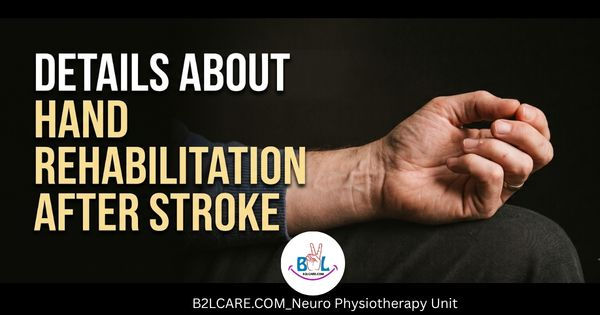
Details about hand rehabilitation after Brain Stroke
When a stroke occurs, the immediate focus is often on survival and regaining basic mobility along with hand rehabilitation. For many stroke survivors, their families, and caregivers, the early weeks of rehabilitation bring a profound sense of hope. You watch as trunk stability returns. You celebrate the first steps—whether taken independently or with the steadying support of a loved one or a cane. Indoor mobility begins to improve, and the world starts to open up again.
Yet, as the legs begin to move, a heavy and frustrating silence often settles over the upper body. A common, deeply felt question arises: "Why are my hands taking so much longer to recover?"
It is incredibly common to see a survivor walking around their home, yet unable to hold a morning cup of coffee, pull open a drawer, or push a door closed. If you or a loved one are experiencing this, you are not alone, and there is a biological reason for this delay.
Let's dive deep into the science behind hand rehabilitation, why the fingers present a unique challenge, and the advanced strategies used by the b2lcare stroke physiotherapy unit to awaken dormant neural pathways.
The Biological Puzzle: Why Hand Recovery Lags Behind Leg Recovery
The human brain maps the body based on the complexity of its movements, not its physical size. The area of the brain dedicated to controlling your hands and fingers is massive compared to the area dedicated to your legs. Because the neural real estate for the hand is so large, a stroke can disrupt these intricate networks quite severely.
Here is a closer look at the unique challenges of upper limb recovery:
1. Fine Motor Dexterity vs. Gross Motor Function
Think about how we use our lower limbs. The primary goals of the legs and feet are structural support, balance, and alternating forward movement (walking). Even if a stroke survivor temporarily loses control over their toes, the larger muscle groups of the hip, thigh, and calf can still cooperate to allow walking.
The hand, however, is a masterpiece of fine motor function. Almost everything we do with our hands relies entirely on the precise, independent mobility of our fingers. Without the ability to move individual fingers, the hand cannot perform its daily duties. While you can walk without moving your toes, you cannot easily grasp a fork without moving your fingers.
2. The Symphony of Small Muscle Groups
The hand is packed with a complex network of small intrinsic and extrinsic muscles. To perform a seemingly simple task—like unscrewing a bottle cap, peeling a piece of fruit, or typing on a phone—these tiny muscles must fire in perfect, millisecond-delayed harmony. They must pull, stabilize, and relax concurrently. Rewiring the brain to orchestrate this level of multi-muscle coordination simply takes much more time and intensive focus than retraining the large, repetitive muscle patterns used for walking.
3. The Clenched Fist: Understanding Spasticity
During the brain's healing process, damaged neural pathways often send chaotic, continuous signals to the muscles, telling them to contract. This results in spasticity—an intense, involuntary muscle tightness.
A Crucial Distinction: In stroke recovery, spasticity frequently causes the fingers to curl into a tightly clenched or flexed position. This is often misidentified as a "claw hand." However, a true claw hand is a structural deformity caused by peripheral nerve damage. Stroke-induced spasticity is a neurological volume control issue—the brain's "contract" switch is stuck in the "on" position, making it incredibly difficult for the survivor to open their palm to receive an object.
The Path to Reconnection: Comprehensive Treatment Options
Restoring life to a paretic hand requires a highly systematic, patient, and multi-faceted therapeutic approach. At the b2lcare stroke physiotherapy unit, recovery is broken down into tailored, scientifically backed phases:
1. The Power of a Detailed Assessment
Effective rehabilitation never uses a one-size-fits-all protocol. A meticulous initial assessment is vital to uncover subtle, easily overlooked barriers that could quietly stall progress.
Sensory Evaluation: We often think of movement as purely motor, but it relies heavily on sensation. When you touch an object, your skin sends data to your brain regarding its texture, weight, and slipperiness. The brain instantly modifies how hard the muscles need to squeeze. If a stroke has caused a sensory deficit, the brain is essentially operating in the dark. Identifying and treating sensory loss is foundational to restoring physical control.
Strategic Hand Positioning: Leaving a spastic hand curled up all day allows the muscles and tendons to physically shorten over time, leading to permanent joint contractures. Implementing proper hand positioning protocols, specialized splinting, and regular gentle stretching throughout the day protects the integrity of the joints while the brain heals.
2. Neurological Facilitation Techniques
To regulate abnormal muscle tone and break down rigid spastic patterns, specialized physical therapy approaches are utilized. Techniques like the Rood Approach, Bobath Approach, and Modified Bobath Approach use sensory stimulation (like tapping, temperature, or specific handling) to inhibit overactive muscles, facilitate weak ones, and rebuild natural, fluid movement patterns.
3. Harnessing Tech: Robotic Therapy
To truly accelerate recovery, the brain needs high-repetition, meaningful practice to trigger neuroplasticity—the brain's remarkable ability to forge entirely new neural pathways around the damaged area.
To achieve this, the b2lcare stroke physiotherapy unit integrates cutting-edge hand robotic therapy into their neuro-rehabilitation programs. These robotic gloves assist the hand in completing thousands of precise, task-oriented repetitions that would be impossible to achieve manually, effectively telling the brain: "This is how the hand opens, and this is how it closes."
[Stroke Impacted Brain] ──(High Repetition / Robotics)──> [Neuroplasticity] ──> [New Neural Synapses Formed] ──> [Restored Hand Function]
4. Mirror Therapy: Visual Deception for Neural Awakening
Mirror therapy is a fascinating and highly effective tool for upper limb recovery. A mirror is placed vertically along the center of the patient’s body, blocking the view of the stroke-affected hand and reflecting the healthy hand. When the patient moves their healthy hand, the mirror creates a powerful visual illusion that the weaker hand is moving perfectly. This visual feedback tricks the brain, stimulating the motor cortex, waking up dormant pathways, and preparing the affected hand for active movement.
5. Task-Oriented Occupational Therapy
True independence is regained by practicing real-world movements. Functional occupational therapy takes everyday tasks—like folding a towel, holding a spoon, or picking up coins—and integrates them into therapy. If a patient cannot manage a whole task yet, therapists break the activity into micro-segments (e.g., first just touching the spoon, then gripping it, then lifting it). This task-oriented training provides the exact motor control practice the brain craves to rebuild practical, daily autonomy.
🚫 Essential "What NOT to Do" in Hand Rehabilitation
When managing hand recovery at home, well-meaning caregivers often make mistakes that can inadvertently set back progress. Keep these critical guidelines in mind:
❌ Do NOT place a stress ball or hard object in the patient’s palm: It is a common myth that squeezing a ball helps. In a stroke-affected hand, placing an object in the palm triggers a primitive grasp reflex, firing up the spasticity and forcing the fingers into an even tighter, unyielding fist.
❌ Avoid forced, rapid, or aggressive movements: Trying to yank a spastic hand open or forcing fast exercises activates the muscle's stretch reflex, causing it to lock up even tighter. Instead, focus on slow, deeply controlled, smaller-range movements. Gentle control is infinitely more effective than high-speed, forceful thrusts.
❌ Don’t skip the relaxation phase: Breaking an abnormal, spastic movement pattern requires immense conscious effort and mental focus from the survivor. Always begin hand training sessions with calming relaxation techniques to reduce systemic tension and prime the patient’s attention for highly focused motor control.
Embracing the Journey
Reclaiming the use of your hand after a stroke is a marathon of millimeters. It requires patience, consistency, and the right expertise. While the legs may carry you forward first, your hands do not have to be left behind.
Through customized positioning, dedicated occupational therapy, and the advanced neuro-technologies utilized by the b2lcare stroke physiotherapy unit, the brain can adapt, rebuild, and slowly bring control back to where it belongs—one finger at a time.
Why hand rehabilitation need more planning ?
Because making the hand functional again requires retraining many small muscles to work together in precise coordination.
Is Spasticity manageable?
Yes, it can be managed effectively. The key lies in carefully evaluating and understanding the patient's unique patterns of spasticity and abnormal movement.
Can wrong therapy delay the hand rehabilitation process ?
Yes, and the risks go beyond delays. Incorrect therapeutic approaches can cause irreversible damage, leaving the hand permanently non-functional.
Have Questions, Let's Talk


Comments